
Handfasting in a Beach Ceremony: A Complete Guide
Table of Contents
What a Beach Handfasting Ceremony Looks Like
The Handfasting Ceremony Meaning Behind the Tied Hands
Handfasting Cord Ideas for a Coastal Setting
How to Tie a Handfasting Knot That Holds in the Wind
Knots that survive coastal conditions
Step-by-step tie for a windy beach
Pre-ceremony cord prep
If the knot fails mid-ceremony
A Handfasting Ceremony Script You Can Adapt
Step-by-Step Beach Ceremony Run Sheet
Beach Setup, Permissions, and Backup Planning
Permits and local rules
The tide, wind, and weather checklist
The backup plan that actually works
Environmental etiquette
Setup order on the day
Making the Ritual Comfortable for Every Guest
Frequently Asked Questions
Last Updated: October 14, 2026
What a Beach Handfasting Ceremony Looks Like
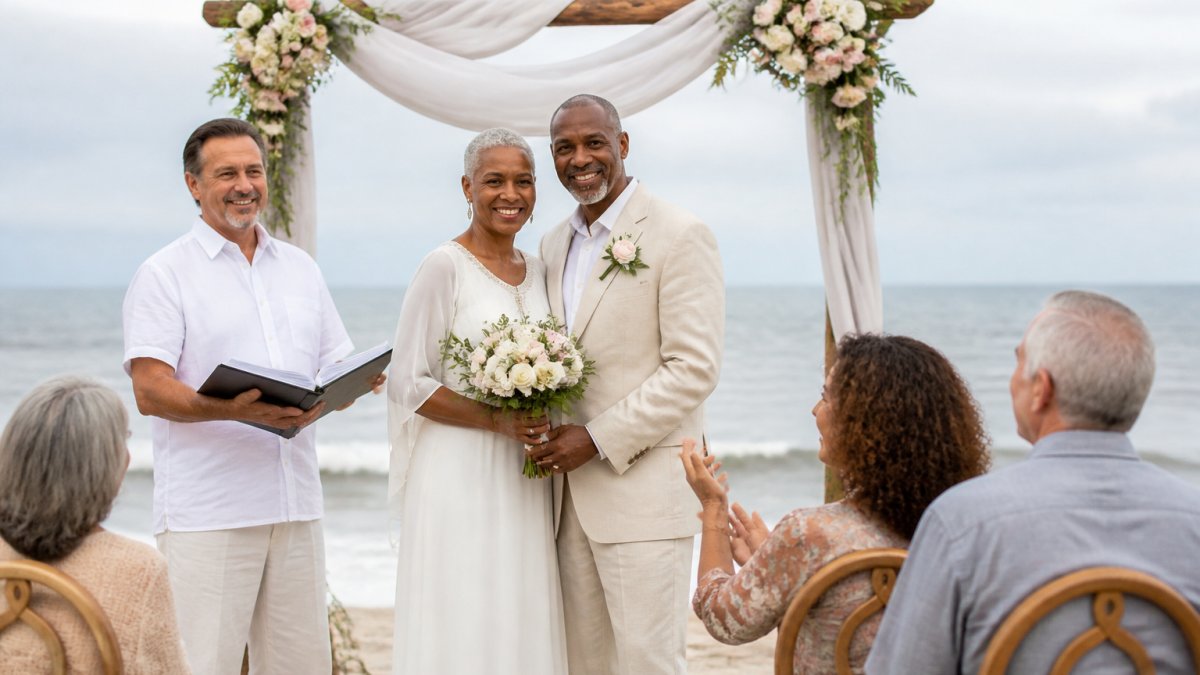
Incorporating handfasting into a beach ceremony is simpler than most couples expect. You face each other, your officiant wraps a cord around your joined hands, and you speak your vows while your hands stay bound.
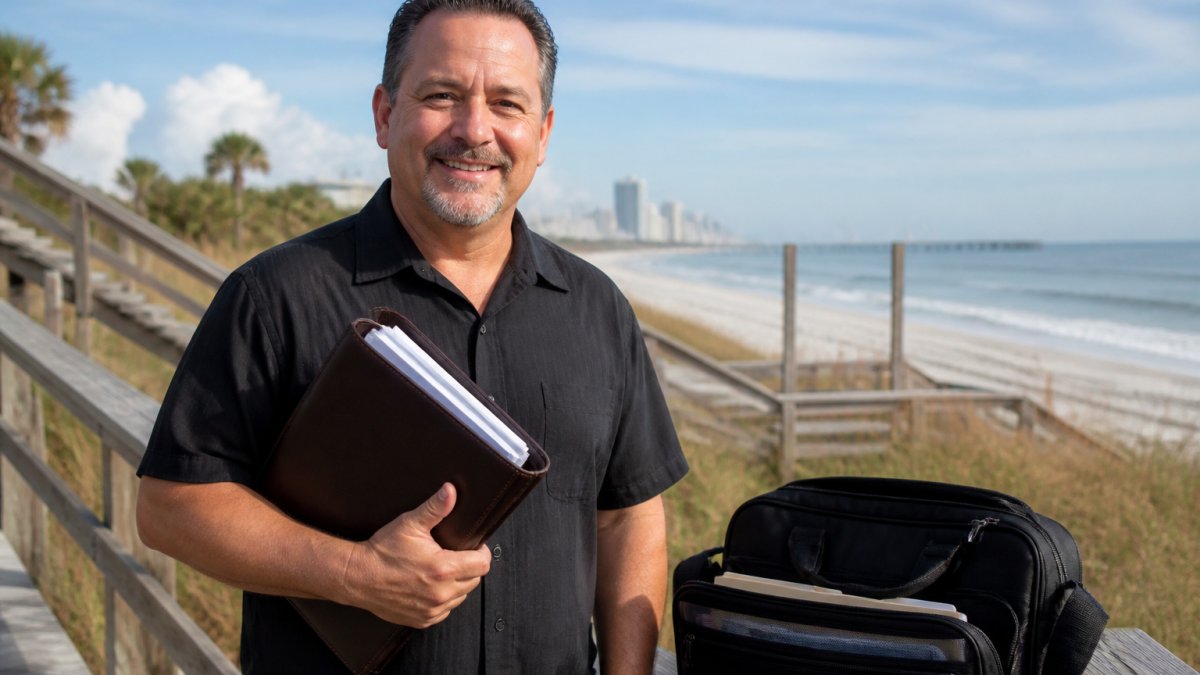
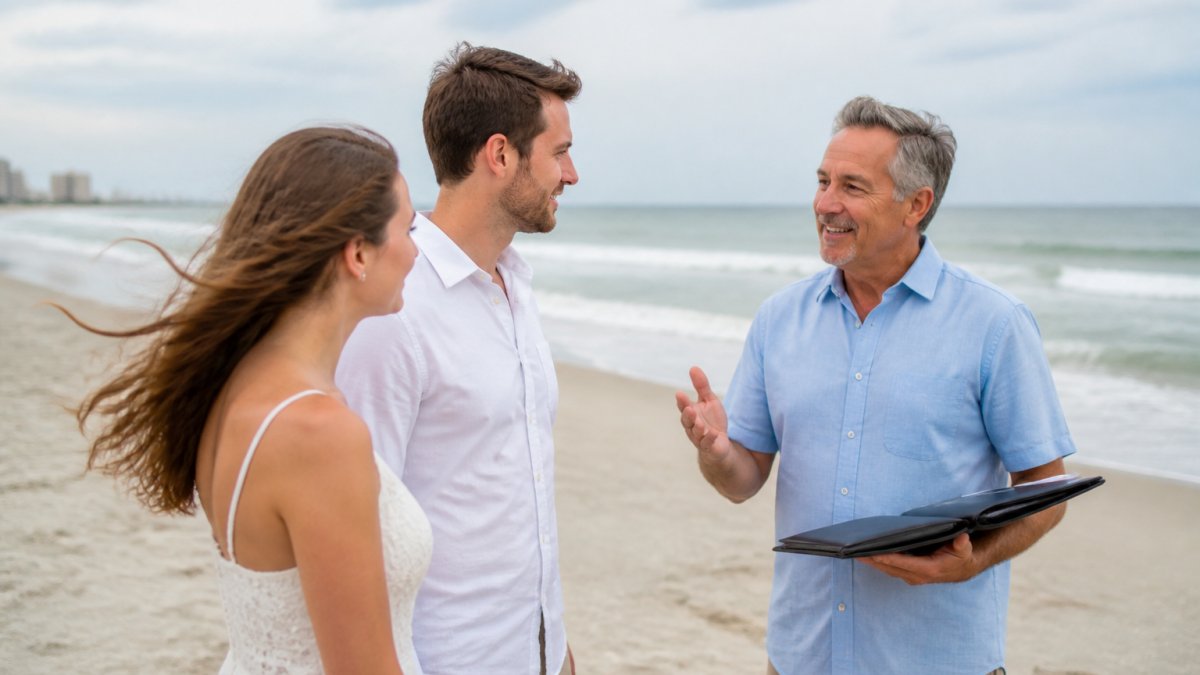
At Coastal Vows By Mike, we walk couples through this moment during a planning call:
You face each other and join hands, usually right hands to right hands
Your officiant lays the cord over your wrists and loops it once
You speak your vows while the cord stays in place
That last step matters. The knot stays tied as a keepsake, and many couples frame the cord afterward.
The beach adds one wrinkle: wind. A loose silken cord whips around in coastal gusts.
The Handfasting Ceremony Meaning Behind the Tied Hands
Handfasting is an ancient Celtic ritual in which a couple's hands are bound together to symbolize their union.
The symbolism runs deeper than most people realize:
The binding represents two lives joined, not two people trapped
The knot stands for a commitment that holds under pressure
The cord itself is often kept as a physical reminder of the vows
Some couples ask about the "year and a day" tradition, in which a handfasting served as a trial period before formal marriage.
If you want the ritual to carry legal weight, you still need a valid marriage license and an officiant authorized to sign it.
Handfasting Cord Ideas for a Coastal Setting
Cord choice is where beach handfasting gets personal. The right cord fits your colors, survives the wind, and photographs well against sand and sky.
The Celebrant Sisters
Popular options:
Cord Type | Best For | Wind Resistance | Notes |
Braided cotton | Casual beach ceremonies | Good | Holds knots well, affordable |
Silk ribbon | Formal ceremonies | Fair | Beautiful drape, slips in wind |
Plaited cord | Celtic-themed weddings | Excellent | Thick, easy to grip |
Linen fabric strip | Rustic or boho themes | Good | Soft, natural texture |
Beaded cord | Couples wanting detail | Fair | Beads catch light in photos |
Length matters too: 1.5 to 2 meters gives your officiant enough slack to wrap both pairs of hands without tugging.
Color carries meaning in many traditions: red for passion, blue for peace, green for growth, white for new beginnings.
A common mistake is choosing a cord that is too short.
How to Tie a Handfasting Knot That Holds in the Wind
On a beach, the knot is the part most likely to go wrong: wind lifts loose cord ends, sand works into the weave, and damp hands slip. The fix is choosing a knot that tightens under load, prepping the cord beforehand, and rehearsing the tie at least once on the sand.
Knots that survive coastal conditions
Three knots show up again and again in beach handfastings. Each has a trade-off.
Fisherman's knot (also called the true lover's knot). Two interlocking overhand knots that pull against each other and tighten under load. Best all-around choice for wind because it does not loosen when the cord is jostled. Trade-off: it is hard to untie later, so plan to keep the cord tied as a keepsake.
Square knot (reef knot). Simple, symmetrical, photographs cleanly. Trade-off: it can slip on smooth silk or satin ribbon, so it works best on braided cotton, plaited cord, or linen.
Bowline. Creates a fixed loop that will not cinch down on wrists, which matters if either partner has wrist sensitivity or a watch or bracelet in the way. Trade-off: bulkier profile and a longer tail to manage in wind.
A common pattern is a fisherman's knot for the symbolic binding, then a simple overhand knot on top for visual weight in photos, the double-knot approach also gives the cord handler a second chance if the first knot slips.
Step-by-step tie for a windy beach
Have both partners cross their wrists and join hands at chest height, not waist height, higher hands stay out of the sand and wind shadow.
Have the cord handler stand slightly to one side, upwind of the couple, so any gust pushes the cord toward the hands rather than away.
Lay the cord across the top of the joined wrists, leaving equal tails on each side.
Wrap one end under and over the wrists, then pass it through the loop to form the first overhand knot.
Repeat with the other end in the opposite direction so the two knots pull against each other.
Pull both tails gently and evenly, snug, not tight.
Tuck the loose ends under the wrapped section or pin them with a small fabric clip so they do not flap during vows.
Pre-ceremony cord prep
Wind problems usually start before the ceremony. A few prep steps prevent most of them:
Coil, don't drape. Loosely coil the cord and secure it with a hair tie or fabric strip, a draped cord becomes a tangled cord in a gust.
Weight the tails. Small decorative beads, a coin sewn into the hem, or a fabric charm at each end keeps tails from lifting.
Store it in a cloth bag, not a plastic one. Plastic traps heat and can crease silk or linen; a cotton drawstring bag keeps the cord clean and lets it breathe.
Pro Tip If the forecast calls for sustained wind above roughly 15 mph, switch to a plaited or braided cord. Smooth silk and satin ribbon catch wind like a sail and are the most likely to slip a knot.
If the knot fails mid-ceremony
The officiant should have a recovery line ready, such as: "The wind is doing its best to untie us, but this promise holds." Then re-tie the knot without breaking the moment.

A Handfasting Ceremony Script You Can Adapt
A good handfasting ceremony script runs 90 seconds to three minutes. Anything longer loses the room, especially on a windy beach.
Here is a simple script you can hand to your officiant:
"Today, [Partner A] and [Partner B] come together not just in law, but in heart. As I wrap this cord around your hands, I ask you to remember that a knot is not a cage. It is a promise. It says: I choose you, again and again, in calm weather and in storms. May this cord remind you of the day you stood here, with sand under your feet and the ocean as your witness. You may now share your vows."
Then the couple speaks their vows while the cord stays wrapped. After the vows, the officiant says:
"By the power of your commitment and the witness of those gathered here, your hands are bound. What is tied in love cannot be undone by time. You may now kiss." Check Your Date →
Feel free to swap in your own language. Coastal Vows By Mike builds each script around a questionnaire so the words sound like you, not a template, and our planning calls cover where the handfasting fits in the ceremony order.
Step-by-Step Beach Ceremony Run Sheet
Timing keeps a beach ceremony from dragging. Our run sheet:
Time | Step | Notes |
30 min before | Guests arrive, seating set | Check wind direction |
5 min before | Processional music starts | Officiant takes position |
0:00 | Welcome and opening words | 2 minutes |
0:02 | Reading or reflection | Optional, 1-2 minutes |
0:04 | Handfasting ritual | 2-3 minutes |
0:07 | Vow exchange | 2-4 minutes |
0:11 | Ring exchange | 1 minute |
0:12 | Pronouncement and kiss | 1 minute |
0:13 | Recessional | Music, guests stand |
Total: roughly 15 minutes for the ceremony itself, plus 5 minutes for a sand ceremony or family participation.
A common mistake is stacking too many rituals back to back. Handfasting, unity sand, a candle lighting, and a reading will feel long even at 20 minutes. Pick two rituals maximum.
Beach Setup, Permissions, and Backup Planning
Most handfasting guides stop at the ritual. What actually decides whether a beach ceremony goes smoothly is the planning layer underneath it: permits, tides, wind, weather, and what you leave behind on the sand.
Permits and local rules
Beach ceremony rules are set locally, so call the specific beach's managing authority, one of three bodies:
City or county parks department for municipal beaches
State parks agency for state-managed shoreline
A private resort or homeowners association if the beach is not public
Ask four questions when you call:
Is a permit required for a ceremony of our guest count?
Are there restricted hours, seasons, or protected dune areas?
Are amplified sound, chairs, arches, or a runner allowed?
Is there a fee, and how far in advance must we apply?
Small ceremonies, often under 10 to 15 guests, are sometimes allowed without a permit, but the threshold varies. Do not assume; a five-minute call prevents a ranger interrupting your vows.
The tide, wind, and weather checklist
Run this list the week of the ceremony and again the morning of.
Tide tables. Pull the official tide chart and identify the low-tide window, low tide gives you the widest dry sand and the most setup room, while high tide can reach chairs, arches, and the couple's feet.
Wind speed and direction. Check the hourly forecast, not just the daily high. Set chairs so guests do not face into the wind, and place any backdrop downwind of the couple.
Rain probability. Coastal showers build fast in the afternoon; a morning ceremony is statistically safer on most shorelines.
The backup plan that actually works
"We'll figure it out" is not a backup plan. A real one has three parts:
A named alternate location, a pavilion, covered deck, indoor space, or restaurant private room, booked or held in advance.
A decision deadline. Pick a time, often two to three hours before the ceremony, when you commit to moving. Deciding in the moment causes chaos.
A communication path. One person, a planner, family member, or the officiant, texts the guest list if the location changes.
Watch Out Do not skip the backup location. Afternoon coastal storms can turn a beach setup into a scramble in under 20 minutes. A held pavilion reservation costs far less than a ruined ceremony.
Environmental etiquette
Beach ceremonies leave traces if you are not careful. A few habits keep the shoreline clean and you on the right side of local rules:
Leave no ribbon, pins, or petals behind. Silk ribbon, corsage pins, and loose flower petals are the most common items left on sand. Assign one person to sweep after the recessional.
Skip rice, confetti, and balloons. Many coastal areas restrict or ban them because they harm wildlife and litter the shoreline.
Stay off the dunes. Dune grass is fragile and often protected. Keep the ceremony and photos on flat sand or a boardwalk.
Setup order on the day
A workable sequence for a handfasting beach ceremony:
Arrive 60 to 90 minutes early to claim the spot and check wind direction.
Set chairs and any backdrop downwind of the ceremony space.
Stage the cord in its cloth bag with the officiant, not on a table where wind can reach it.
Brief the cord handler on hand height, upwind position, and the recovery line.
Do a two-minute dry run of the tie with the actual cord.
Sweep the area after the recessional for ribbon, pins, and petals.
For out-of-state couples, this planning layer is the hardest part to manage remotely. Coastal Vows By Mike handles location logistics, permit guidance, and marriage license questions so you are not juggling three phone calls the week of your wedding. Mike also offers mobile notary services in the Myrtle Beach area, traveling to clients for document signings and other notary needs.
Making the Ritual Comfortable for Every Guest
Comfort decides whether guests remember your ceremony or just remember being hot.
Start with the ground. Sand is unstable, and older guests or anyone with mobility needs will struggle.
Next, think about visibility. Guests standing behind you cannot see the cord being tied.
Then, handle consent. Ask your officiant to explain the ritual briefly beforehand.
Other comfort basics:
Provide water or a shaded area for guests
Keep the ceremony under 20 minutes
Skip barefoot-only instructions unless the sand is safe
A relaxed ceremony is a memorable one.
Planning a beach ceremony with a handfasting ritual takes more coordination than a standard venue wedding. We build the script around your story, guide you through rituals like handfasting or unity sand, and handle the logistics so your ceremony flows without a hitch.
Frequently Asked Questions
How do you keep a handfasting cord secure outdoors?
Use a plaited or braided cord rather than a single silken ribbon, since braided cords grip each other and resist slipping when wind catches the loose ends. Tie a fisherman's knot or a double overhand knot, then tuck the tails under the loop rather than letting them hang. Have the officiant hold the loose ends during the reading, and keep a second cord in your bag as a backup. Practicing the knot twice before the ceremony is the single most reliable safeguard.
How long does a handfasting ritual take?
Most handfasting rituals run three to five minutes from the first cord to the final knot, which fits comfortably inside a 20 to 30 minute beach ceremony. If you add a reading, a family participation moment, or a vow exchange while your hands are bound, plan for six to eight minutes. Tell your officiant the target length in advance so the wording, music, and photography cues are paced to match.
Who can perform a handfasting ceremony?
A handfasting ritual can be led by a professional officiant, a celebrant, a friend, or a family member. What matters legally is who signs the marriage license. In South Carolina, a minister or notary public can officiate and sign. If a friend leads the handfasting portion, a licensed officiant can still handle the legal paperwork, so you get both a personal moment and a valid marriage.
Can you personalize the words used during handfasting?
Yes, and most couples should. The traditional wording is short, so there is plenty of room to add a line about how you met, a phrase in a family language, or a promise tied to the place you are standing. Send your officiant two or three specific details, such as a shared hobby or the reason you chose a beach ceremony, and ask them to weave those into the cord blessing rather than reading a generic script.
Check Your Date
Comments